
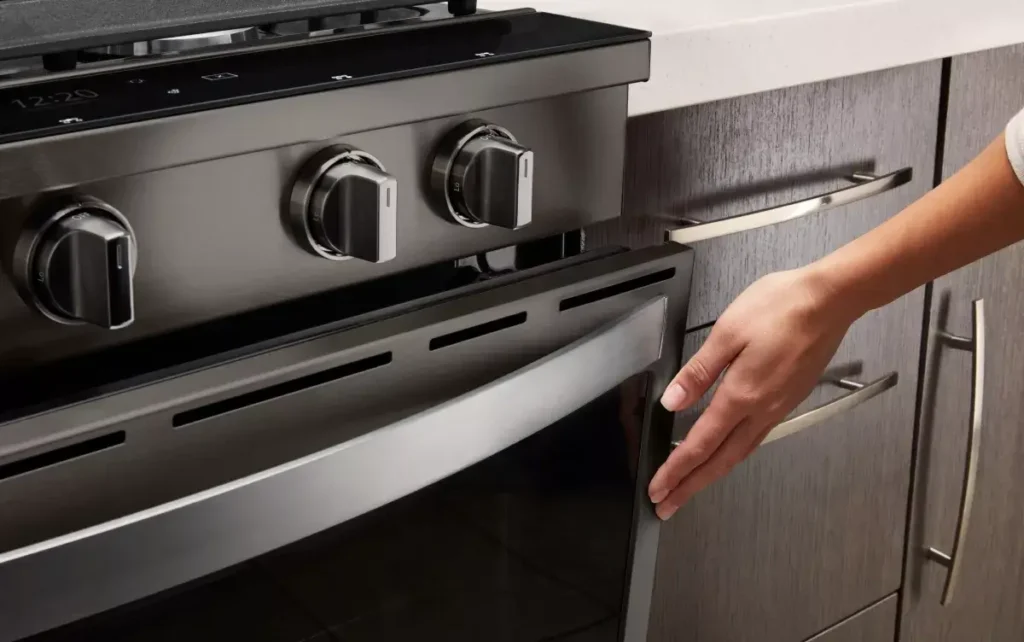
 Waiting for your oven to preheat shouldn’t feel like watching paint dry. If it’s taking much longer than usual to reach cooking temperature, something’s likely off. A slow preheating oven isn’t just annoying – it can throw off your cooking times, impact food quality, and point to underlying appliance issues. Let’s break down the most common reasons why your oven takes too long to preheat, and what you can do about it.
1. Faulty Heating Elements
In electric ovens, the bake and broil elements are responsible for generating heat. If one of these elements is damaged or failing, your oven may still warm up – just at a much slower rate.
What to look for:
- Uneven heating or hot spots
- Element not glowing red during operation
- Visible damage or blistering on the element
If one of the elements isn’t working properly, it may need to be replaced.
2. Malfunctioning Temperature Sensor
Your oven’s temperature sensor plays a crucial role in regulating heat. If it’s faulty, the oven may misread the actual temperature inside and either heat too slowly or not reach the target temperature at all.
Symptoms of a bad sensor:
- Oven stays cool despite being on for a while
- Food cooking unevenly or taking longer than expected
- Inaccurate temperature readings
Replacing a bad sensor is a fairly common fix and often solves inconsistent preheating problems.
3. Gas Ignition Issues (For Gas Ovens)
If you’re using a gas oven, the problem may be with the igniter. This component sparks the burner to ignite the gas. A weak or failing igniter can delay the heating process significantly.
Signs of ignition problems:
- You hear clicks, but no flame right away
- Burners take a long time to light
- Strong gas smell before ignition
This is not only inconvenient – it can be dangerous. It’s best to call a professional technician if your gas oven is taking too long to heat.
4. Oven Door Not Sealing Properly
If heat is escaping through a damaged or worn door gasket, your oven has to work harder and longer to reach the desired temperature. This could be as simple as a loose seal or warped door.
Check for:
- Warm air leaking around the oven door
- Visible cracks or gaps in the rubber gasket
- Door not closing tightly
Replacing the gasket is a quick and affordable oven repair that can significantly improve preheat time and energy efficiency.
5. Too Many Racks or Oven Overload
Sometimes, the issue isn’t mechanical. Overloading your oven with too many racks or trays can restrict airflow and delay preheating. Removing unnecessary items or adjusting rack positions may solve the problem. Always start preheating with the oven empty unless a recipe specifically calls for preheating with a pan inside.
6. Calibration Is Off
If your oven consistently takes longer than expected to preheat or cooks food unevenly, it might just need to be recalibrated. Over time, temperature readings can drift off from factory settings. Most modern ovens allow calibration through the control panel. If not, a technician can easily adjust it for you.
How Long Should an Oven Take to Preheat? (Benchmarks by Type)
One of the most common questions we hear at GIR Appliance is: “How long is too long?” The honest answer depends on your oven type, age, and brand. Here are realistic preheat benchmarks to 350°F under normal conditions:
- Standard electric oven (bake element only): 12–15 minutes
- Electric oven with convection: 8–12 minutes (the fan circulates hot air faster)
- Gas oven: 10–12 minutes (gas heats quickly but cycles on and off)
- Double wall oven: 15–20 minutes (larger cavity = more air to heat)
Rule of thumb: If your standard electric or gas oven is taking more than 20 minutes to reach 350°F, something is off. If it’s taking 30 minutes or more, you have a component failure — not a quirk.
Brand and age matter too. A 15-year-old Kenmore may genuinely need 18–20 minutes because its bake element has degraded over time and operates at lower wattage than it once did. But a 5-year-old Samsung or LG oven running that slow is a red flag. If your oven repair service in The Woodlands appointment reveals that your oven has always been slow, calibration or a weak element is usually the culprit — not normal wear.
Keep in mind that ovens with a hidden bake element (where the element is concealed under the floor of the oven) can sometimes feel slower because they rely more heavily on radiated heat rather than direct element exposure. If you’re not sure which type you have, check your model manual or the GIR team can identify it during a diagnostic visit.
🔧 Need a professional repair?
GIR Appliance Repair serves Houston, The Woodlands & Kingwood — same-day availability.
How to Diagnose Which Part Is Causing the Slow Preheat
Before calling a technician, run through this quick diagnostic sequence. It takes about 20–25 minutes and can save you time by narrowing down the problem.
Step 1: Use an oven thermometer. Place an inexpensive oven thermometer on the center rack. Set the oven to 350°F and time how long it takes to reach that temperature. Also note the actual temperature when your oven beeps “preheat complete” — many ovens signal done when they’re still 25–50°F short of target. If your oven beeps at 15 minutes but the thermometer reads 300°F, you have a temperature sensor or control board issue, not a heating element problem.
Step 2: Watch the bake element. On a standard electric oven, the bake element (bottom of the oven cavity) should begin glowing bright red within 60–90 seconds of turning the oven on. If it takes 3–4 minutes to glow, or glows only partially, the element is degrading and drawing less current than rated.
Step 3: Check the broil element too. Many homeowners don’t realize that on most electric ovens, the broil element (top of the oven cavity) also fires during preheat — not to broil, but to boost heat more quickly. If only the bake element is working, preheat time can jump by 5–8 minutes. Look up at the broil element after a few minutes; it should also be glowing red or orange.
Step 4: Feel the door edge during preheat. After the oven has been on for 5 minutes, carefully run your hand along the outside edge of the oven door (not the glass — that’s expected to be warm). If you feel warm air streaming out from the sides or bottom of the door, your door gasket is compromised and you’re losing heat continuously.
Step 5: Check for error codes. Most digital ovens made after 2010 will display a fault code (F1, F3, E1, etc.) if a sensor or control component has failed. Check your model’s error code list — a quick web search for “[your model] + error codes” usually turns up the full list. Some codes point directly to the temperature sensor (common: F3 on GE ovens) or control board.
Step 6: Gas oven — time the ignition. For gas ovens, the burner flame should appear within 30–60 seconds of turning the oven on. If you hear the igniter clicking for 2–3 minutes before you see a flame, or if you smell gas before ignition, stop immediately and call a professional. Do not attempt to diagnose gas oven igniter issues yourself — a weak igniter that allows gas to build up before catching is a fire and explosion risk.
When to stop diagnosing and call a pro: If you detect a gas smell at any point, see visible arcing or scorching on any element, get an error code you can’t clear, or the oven simply won’t heat at all — call GIR Appliance at (346) 625-4289. Our technicians carry the most common heating elements, sensors, and igniters on the truck, so most repairs are completed same-day.
Oven Preheat Repair Cost — The Woodlands TX
Wondering what it will actually cost to fix a slow-preheating oven? Here are typical repair ranges for the Houston metro area, including The Woodlands, Spring, Conroe, and Kingwood. GIR Appliance charges a $55 service call fee, which is applied toward the cost of any repair — so you’re not paying twice just for a technician to show up and diagnose the problem.
| Issue | Typical Cost (Parts + Labor) | Notes |
|---|---|---|
| Bake element replacement | $120–$220 | Most common electric oven repair; element cost varies by brand |
| Broil element replacement | $120–$200 | Often replaced alongside bake element if both are degraded |
| Temperature sensor replacement | $100–$200 | Sensor itself is usually $20–$50; labor is straightforward |
| Door gasket replacement | $80–$160 | Quick repair; also improves energy efficiency noticeably |
| Oven calibration / recalibration | $0–$55 | DIY via control panel is free; tech visit needed if offset >35°F |
| Gas igniter replacement | $150–$300 | Requires gas line disconnect; always use a certified tech |
| Full oven diagnostic | $55 (applied to repair) | GIR service call fee; credited toward any repair completed same day |
Prices vary depending on your oven brand (high-end brands like Wolf, Thermador, or Viking typically have pricier parts) and whether parts need to be ordered. GIR Appliance provides upfront quotes before any work begins — no surprise charges.
Frequently Asked Questions
My oven says it’s preheated but my thermometer shows it’s 50°F low — what’s wrong?
This is one of the most common complaints we hear, and it almost always points to a faulty temperature sensor or a control board that’s lost its calibration. The oven’s internal sensor is sending the wrong reading to the control board, which triggers the “preheat complete” signal too early. In some cases, a simple recalibration through the settings menu can fix a 15–25°F offset. A 50°F gap, however, usually means the sensor itself needs replacing. It’s a relatively inexpensive repair and makes a huge difference in cooking accuracy.
Does a convection oven preheat faster than a regular oven?
Yes — typically by 3–5 minutes. The convection fan circulates heated air continuously, which eliminates cold pockets and brings the entire oven cavity up to temperature more evenly and quickly. If your convection oven is taking longer than 12 minutes to reach 350°F, either the convection fan motor has failed, or one of the heating elements is underperforming. A non-working convection fan is a common repair and is usually obvious because you won’t hear the fan running during preheat.
Can I just start cooking while the oven is still preheating?
Technically yes, but it’s rarely a good idea. Baked goods — especially anything leavened, like cakes, bread, or muffins — rely on an immediate burst of heat to set their structure. Starting in a cold or partially heated oven can result in dense, sunken, or unevenly cooked results. For roasting meats or vegetables, the difference is less critical, but you’ll still lose sear and texture. The 12–15 minutes it takes to properly preheat is worth the wait — and if it’s consistently taking too long, that’s a signal to get the oven serviced rather than adapt your cooking habits around a broken appliance.
Why does my oven preheat fine but then lose temperature mid-cook?
If your oven reaches temperature normally but then drops during cooking, the issue is usually with the thermostat cycling rather than the initial preheat components. The oven’s thermostat controls how often the heating element cycles on and off to maintain temperature — if it’s failing, the element may not re-engage quickly enough and the cavity temperature drops. This is a different failure mode than a slow preheat, and the oven thermostat may be failing separately from the temperature sensor. A diagnostic visit will identify which component is causing the temperature drop.
Does GIR Appliance fix oven preheating problems in Spring TX, Conroe TX, and Kingwood TX?
Absolutely. GIR Appliance serves the entire Houston north metro area, including The Woodlands, Spring, Conroe, Kingwood, Tomball, and Humble. We offer same-day and next-day appointments for oven repairs throughout the region. Whether you have an electric wall oven, a freestanding gas range, or a built-in double oven, our technicians are equipped to diagnose and repair the issue on the first visit. Call us at (346) 625-4289 or use our online booking to schedule a service call — the $55 fee is applied toward your repair.
Conclusion
A slow-preheating oven can be caused by anything from a faulty heating element to a bad door seal or sensor. While some fixes are simple, others require a professional’s touch to ensure your oven runs safely and efficiently.
If you’re in The Woodlands or Houston area, GIR Appliance is your go-to for fast, reliable oven repair. Our experienced technicians can quickly diagnose and fix the issue so you can get back to cooking without the wait. Contact GIR Appliance today and let us take the heat off your oven troubles!
Dealing with oven preheating issues? Our technicians provide same-day oven repair in The Woodlands, Houston & Kingwood — all brands, upfront pricing, $55 service call applied to repair.
Ready to schedule your repair?
We serve The Woodlands, Kingwood, Spring, Humble & greater Houston. Call or book online.